
Language Learning on the Road

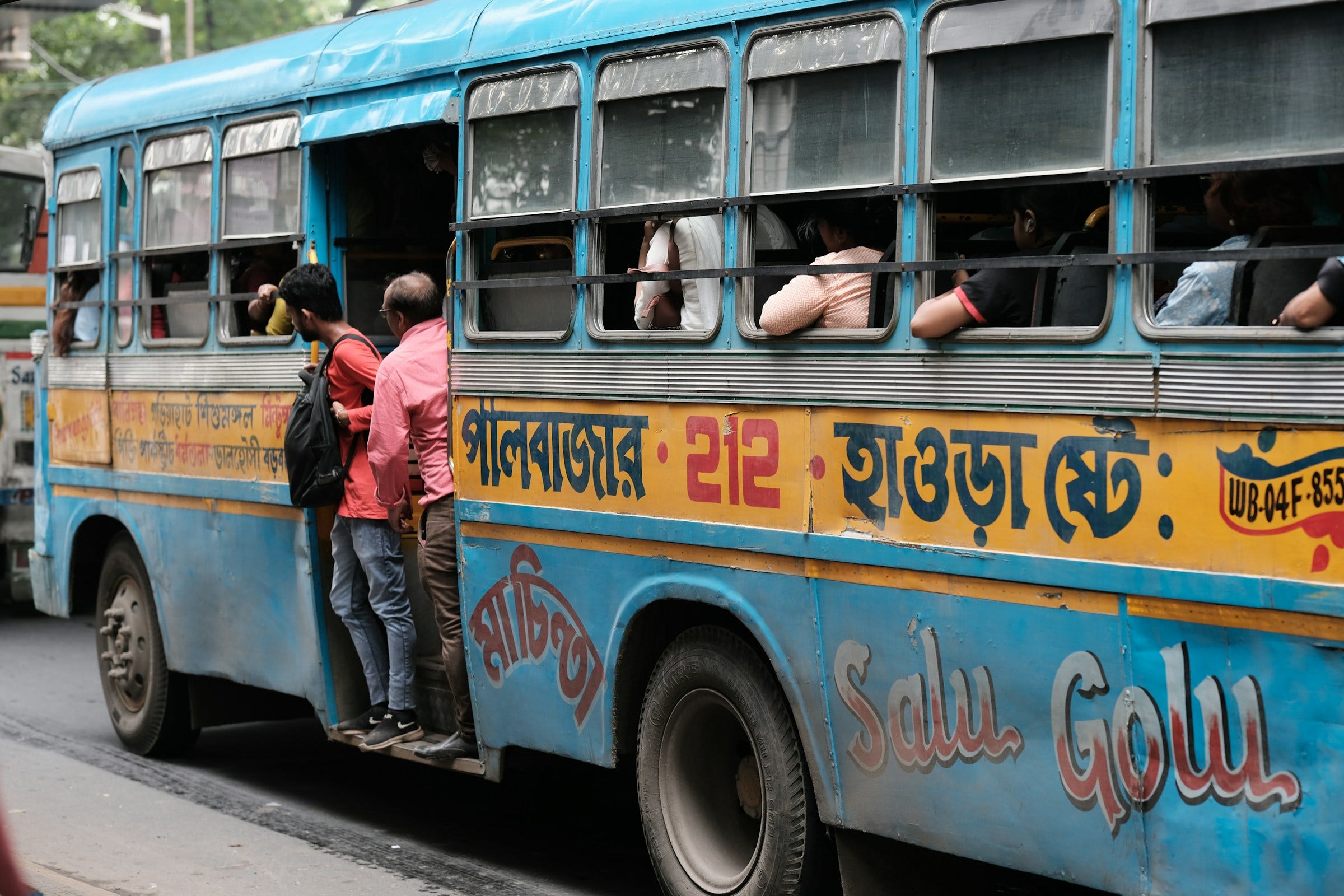
One complication to roaming the world as a perennial nomad is language. According to Wikipedia, estimates of existent languages around the world range from five thousand to seven thousand, depending upon nuances of what constitutes distinct languages and dialects. Of course, many of these are obscure and confined to tiny isolated corners of the Earth; however, even if there are only a few dozen languages important enough to affect travel, this constitutes a significant obstacle to an intentional wanderer. After all, you don’t want to remain on the outside looking in; you want to immerse yourself in the culture and customs of the lands you pass through as best you can.
No problem, you might say. I’ll just look up the words and pronunciations I need on my phone. But what if your phone breaks? Or it runs out of batteries? Or you don’t have a signal? In fact, relying on your cell phone can be a hindrance when it comes to the immersive method of traveling. Instead of an aid, it can be a technological impediment to your getting to know the people and places around you. Instead of having direct contact with your environment, you are shielding yourself from it with secondhand online interpretations. Put your damn phone away, open your eyes and ears and nose and fill your senses with your surroundings.
When I set out on the road fulltime back in the 1970s, I had no choice in the matter. Cell phones did not exist, nor did the internet. Information about the countries I was traveling through came from printed maps and guidebooks. Sometimes I carried these and sometimes I didn’t, but when I would pause between locations I would always somehow gather information about where I was going next. And that included what languages were spoken at my destinations.
The problem with learning languages before you initiate your travels is that it presupposes that you know where you are going. I seldom had this advantage. When I traveled, for directions I depended on inspirations that often only surfaced when I arrived at an interim location. In other words, I’d get somewhere and only then decide where I would go next. In this manner, I crisscrossed the United States and roamed Central America, Europe, the Middle East, South Asia, and Southeast Asia. Picture the diversity of cultures on such an itinerary and you will grasp the futility of learning languages beforehand. Under such circumstances, preparing in advance linguistically is impossible. Instead, I would attempt to learn what I could of the local languages as I went along.
I have the advantage of having English as my mother tongue. I have found that wherever in the world I roamed, I could almost always find someone who could speak at least rudimentary English when I needed to conduct necessary business. As for shopping, that could get a little trickier, as shopkeepers, especially in out-of-the-way places, are not always the most highly educated of the local citizenry and may not have studied English in school. It’s their country, though, so it is my responsibility, as a guest, to communicate effectively. And I have found in numerous places that any attempt, no matter how flawed, to speak even a few words in the local language, is invariably met with encouragement, adulation, and camaraderie as your listeners happily coach you in correct pronunciation. So many tourists can be pompous, overbearing, and condescending; when you make an attempt to respectfully communicate in the language of the land, your sincerity will cause you to stand out.
* * *
Let’s imagine that you are willing to give language learning a try without using your cell phone as a crutch. How do you do it? You go old school, that’s how. Grab a guidebook, preferably in a size that will easily fit in a pocket, and start with the basics. Usually a dozen or so phrases will get you through the fundamentals of greetings and asking directions. Memorize those. And ask passers-by for assistance; most will be more than happy to comply. After that, focus on your surroundings: street signs, billboards, shop names, menus, and so on. If you pay attention, you can pick up a lot of new words and their meanings in context.
If the language of the land uses a different alphabet than yours, this can be challenging. But there is an easy solution: learn the alphabet. Once you memorize the basic characters, your surroundings will provide you with continuous opportunities for practice. Of course, the ease or difficulty of this maneuver depends upon the language in question. I had no success at all when I attempted to learn to read Thai. And I also had a hard time with Tamil, one of the main languages in southeast India; if you add up its vowels, consonants, and compounds, it has almost two hundred fifty characters. When I was living in Kodaikanal, a hill station in Tamil Nadu, and later in Madras (now known as Chennai), the state’s capital and largest city, I made an attempt to learn to read the language around me, but my efforts often ended in confusion. Compared to Tamil, learning to read Hindi, Nepali, Marathi, Bengali, and Greek was easy.
When I spent an extended period of time in Dhaka, Bangladesh, I took my language learning a considerable step further: I enrolled in a Bengali language course for beginners at Dhaka University. There I learned not only to speak the language, but to read it with fair fluency as well. I have to admit that the Bengali works of the Nobel Prize-winning poet Rabindranath Tagore were beyond my capabilities (though I love them so much in English that I gave them a valiant try), but I could read simple texts, and I became an avid and adept bargainer at the street markets where we bought most of our food.
What were some of the toughest languages I tackled? I made very little progress with Thai; the main reason was not the elaborate characters in its alphabet but rather its various tones. As I mentioned above, Tamil gave me difficulties. And I had a tough time learning Greek because of its complex grammar. I lived in Greece for over fifteen years; I taught English there and my Greek wife and I raised our children there. I could find my way around, do the shopping, and carry on rudimentary conversations, but my bilingual sons always had a good laugh when they heard my bad pronunciation and grammar. In contrast, one of the easiest languages I ever tried to pick up was Indonesian, a form of Malay, which is easy to pronounce and uses fairly simple grammatical structures.
In closing, let me emphasize this all-important dictum: there is no place for pride in language learning. You will definitely make mistakes – many of them. As I mentioned above, though, most people will not ridicule you; instead, they will be pleased that you are making the attempt to relate to them in this manner and may even give you some impromptu coaching. The important thing is to keep trying until you get it right. It reminds me of what I read in a book on yoga when I was attempting to incorporate it into my exercise regimen: yoga is a practice; as such, you never arrive at a perfect state of accomplishment. Instead, your aim is continual improvement.
So plunge in. Learn the language. Have fun. Keep trying. Strive to improve, of course, but remember that the point of it is not perfection, but rather communication.
Great article. A few words in the local language can break the ice.